Solutions
Island Lab is a technology and design partner for coastal communities. We take commons problems, the kind where a shared resource is governed by systems nobody can see whole, and build the instruments that make those systems legible enough to steward: sensors, models, maps, and the software that puts them in front of the people who need them.
Most of the work is translation. A seagrass meadow or a fishery touches academia and science, government, community, and industry at once, and each of those holds a different piece of the picture in a different language. We spend time inside each of them and carry what one knows into a form the others can use, which is slower than it sounds and is usually where a project is won or lost.
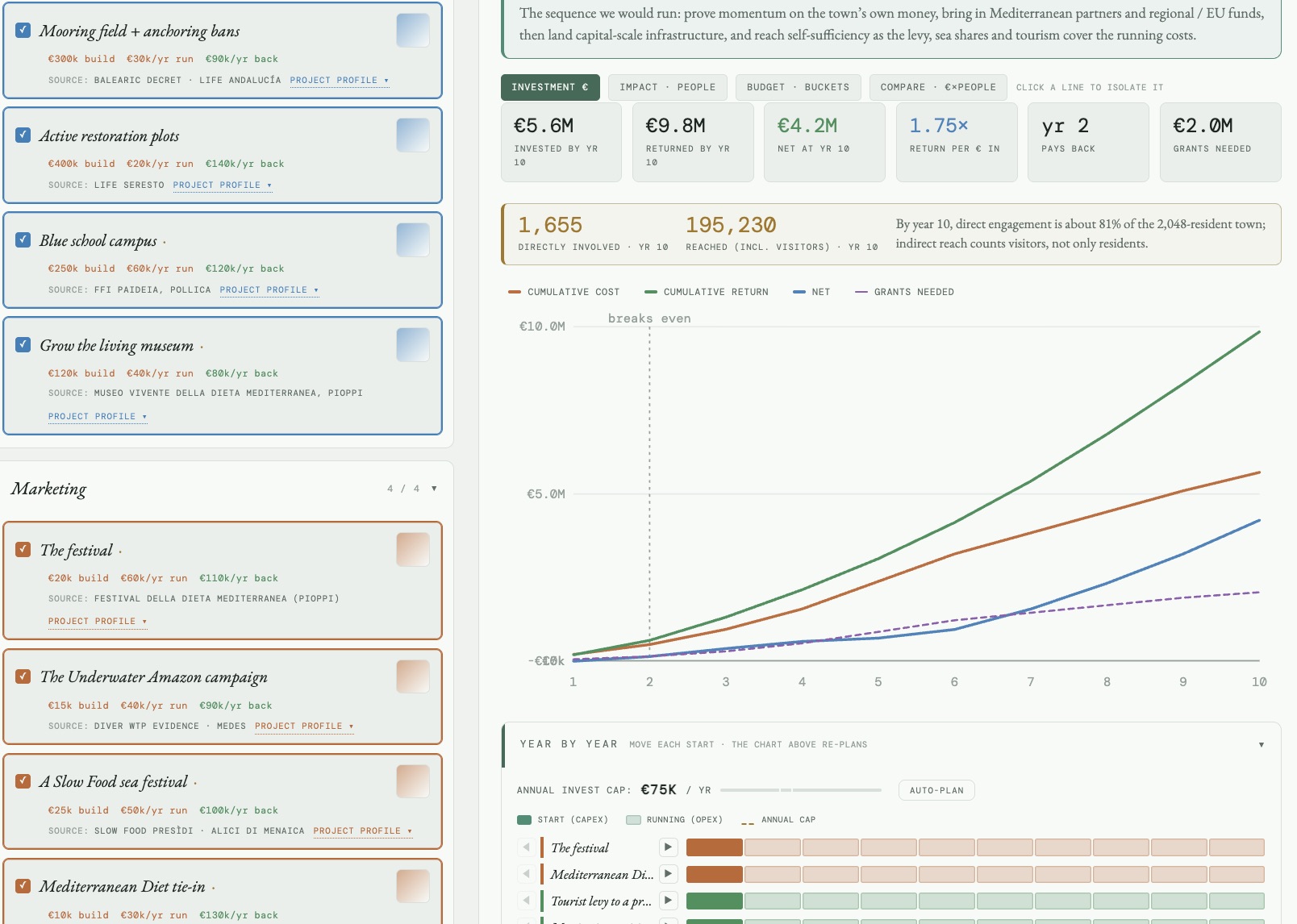
A build has to pass three tests at the same time: people want it (real demand, shown in a pilot), someone can afford to keep it running (a workable economic model), and the method underneath holds up (science a technical reviewer can check). We pilot at every stage, small and early, so each of those is demonstrated before the next round of effort is spent.
We aim for tools that are lightweight and robust, and we design the handover before we design the interface. A build is done when the town's own people operate it, extend it, and argue about it without needing to call us.
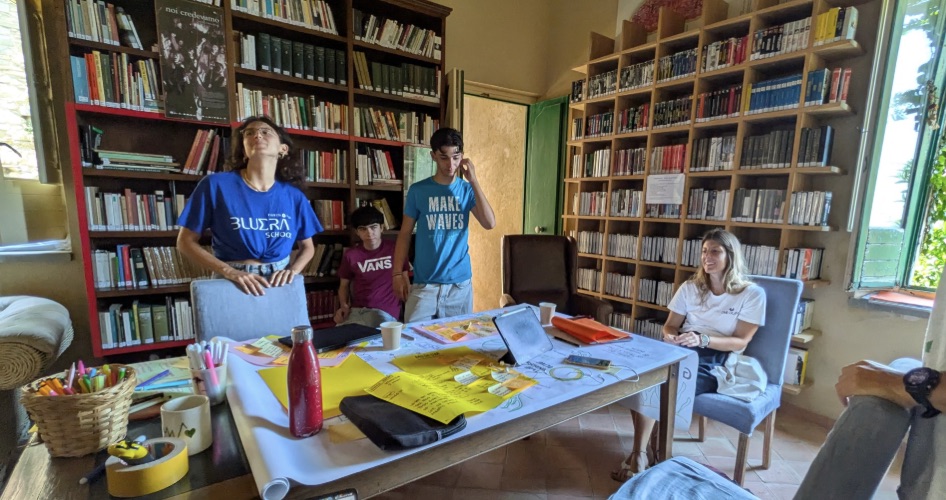
A digital twin of the Posidonia meadows off the Cilento coast, and the application layer that serves the fishermen, students, and resource managers who depend on them, built with the town of Pollica.
Read →Voyages and convenings are one mode of the work, and usually the first one: reading a place begins in person, on its water and in the company of the people who hold it.
Read →A week on the Cilento coast at the invitation of Sara Roversi and the Future Food Institute, and how a visit became the partnership behind the digital twin.
Read →This work predates Island Lab. It is listed for the record, so a reviewer can see the practice the projects above grew out of.
- REAP Climate Center · Grant writing and workforce development strategy for regenerative farming.
- PickNik · Business development in robotics.
- IDEO and IDEO.org · Executive design leadership across software and services.