Island Lab builds tools and partnerships for coastal communities. Before describing any of that, it is worth stating what we think is broken, because a partner deciding whether to work with us is deciding whether we see clearly. Four problems keep coming up, in the San Juan Islands and on every working coast we have sailed.
Seeing the commons
An eelgrass meadow off a San Juan shoreline belongs to no one and matters to everyone. Juvenile crab shelter in it, herring spawn on it, and anchor chains drag through it. Almost nobody can see it. It sits a few feet under a surface that reads as blank water from the road, and the people who could describe its condition from memory (the divers, the crabbers, the shoreline biologists) would fit in one room. The same is true of a fishery or a kelp bed: the coast's most shared systems are its least visible ones.
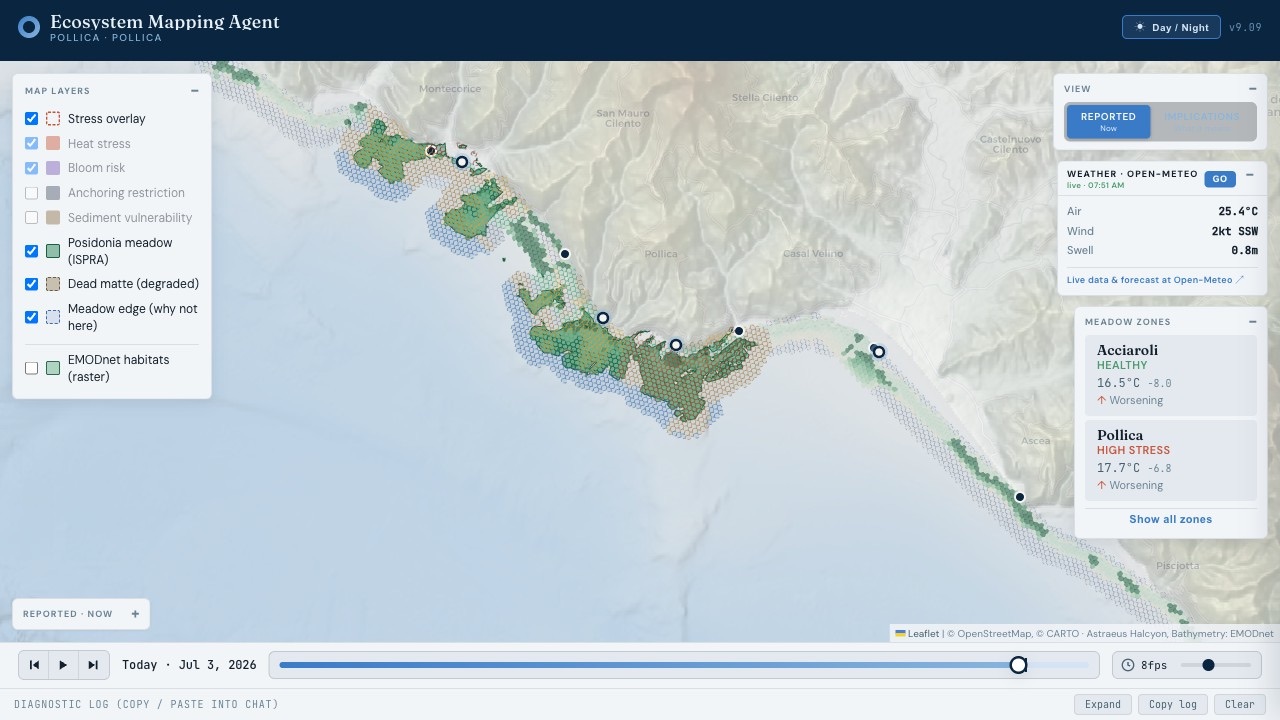
A system nobody can see does not get stewarded. When a shoreline decision comes up (a dock permit, a harvest limit), the parties who arrive with surveys and lawyers set the terms, and the meadow is represented by whoever had the resources to describe it. Everyone else argues from anecdote, which is a losing position even when the anecdotes are right.
So the first job is legibility: making the invisible systems of a coast visible enough for a community to steward, and near enough to cherish. This is also where our interest in gatherings comes from. Understanding a place well enough to act on it is something a group produces together, under conditions worth designing for, which is the subject of On emergence.
Data in pieces
The strange part is that the data mostly exists. NOAA keeps tide and temperature records. The state monitors eelgrass on its own cycle. University labs run surveys and publish careful studies of specific bays. Tribal natural resources departments keep their own monitoring programs. Crabbers and ferry captains carry working knowledge that never gets written down at all. Each piece is real, and each lives in its own silo, on its own timeline.
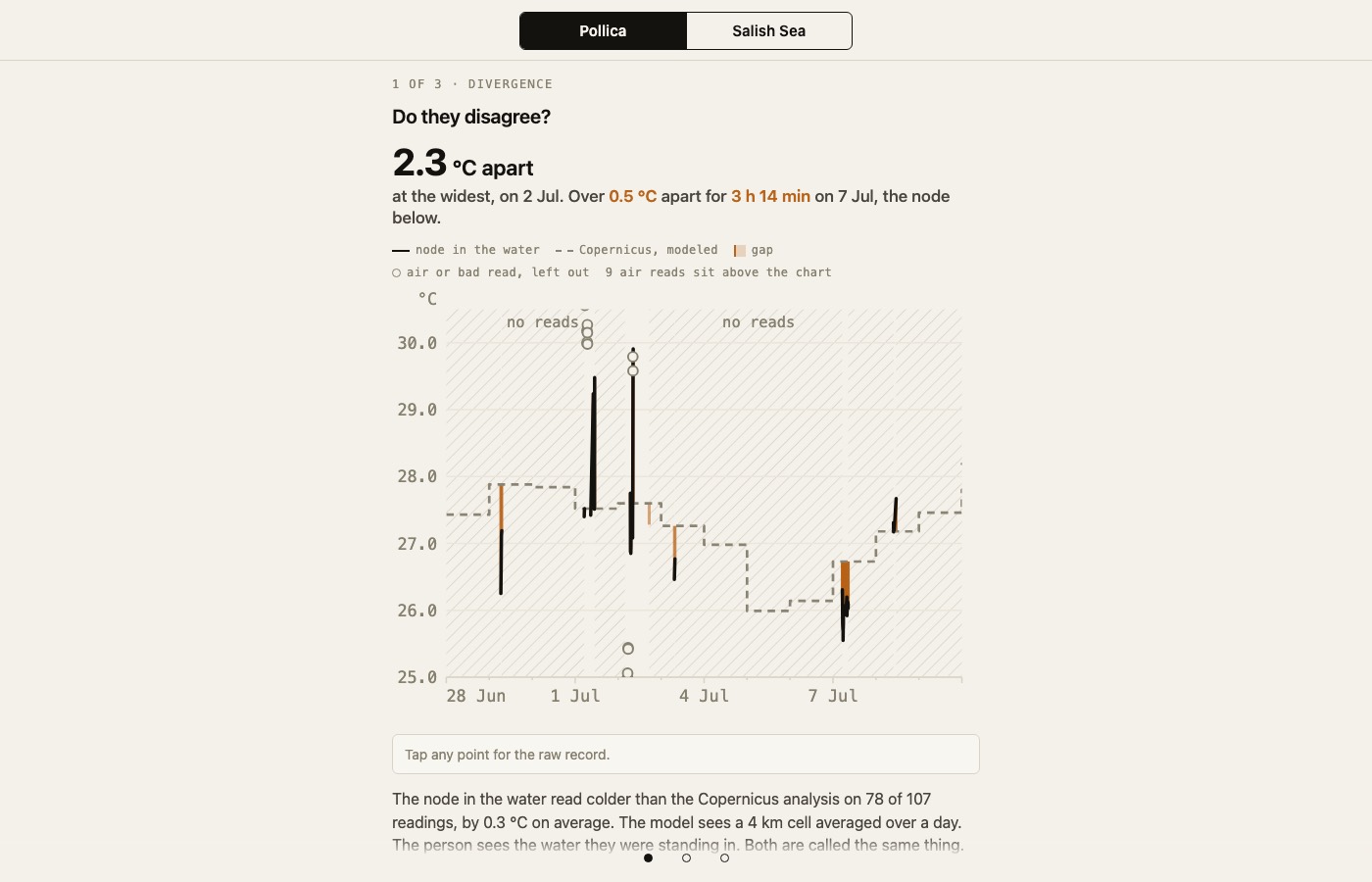
The timelines do the most damage. An academic study of a bay takes years to fund, run, review, and publish, and by the time it appears, the council vote it could have informed is two seasons old. Agency data sets refresh on agency schedules. Model outputs sit on servers built for other researchers. Decisions get made in the gaps, on whatever happened to be at hand.
The missing piece is the connective layer: a current picture that joins the agency record to the academic survey to what the harbormaster saw last week, held where the decisions happen.
Who holds the record
The long-term stewards of a coast are its local governments and communities, and they are usually the least resourced parties in the room. A town public works department watching its shoreline erode is also running the water system and patching the roads. When help arrives, it tends to arrive as a product: a dashboard licensed from a vendor, a portal hosted by a university, a platform whose roadmap is set in another city. The tool works until the grant ends, the company pivots, or the subscription lapses, and the town's record of its own coast goes with it.
What is at stake is data sovereignty. A community that holds its own record of its coast (baselines, trends, what was tried) negotiates from evidence. A community without one negotiates from memory, across the table from parties who brought the numbers.
A community that holds its own record of its coast negotiates from evidence. A community without one negotiates from memory.
The mandate and the trust already exist locally; the empty seat belongs to a builder whose incentives run on the town's timeline. Why that seat is so rarely filled, and what kind of partner could fill it, is the argument of The third partner.
Stewardship is work
Monitoring a coast is labor. Sensors foul and need cleaning, survey transects need swimming, maps need reading, and reports need writing. Today most of that labor is done by people who drive or fly in, take their measurements, and leave with them, so the skills concentrate in institutions far from the water they describe.
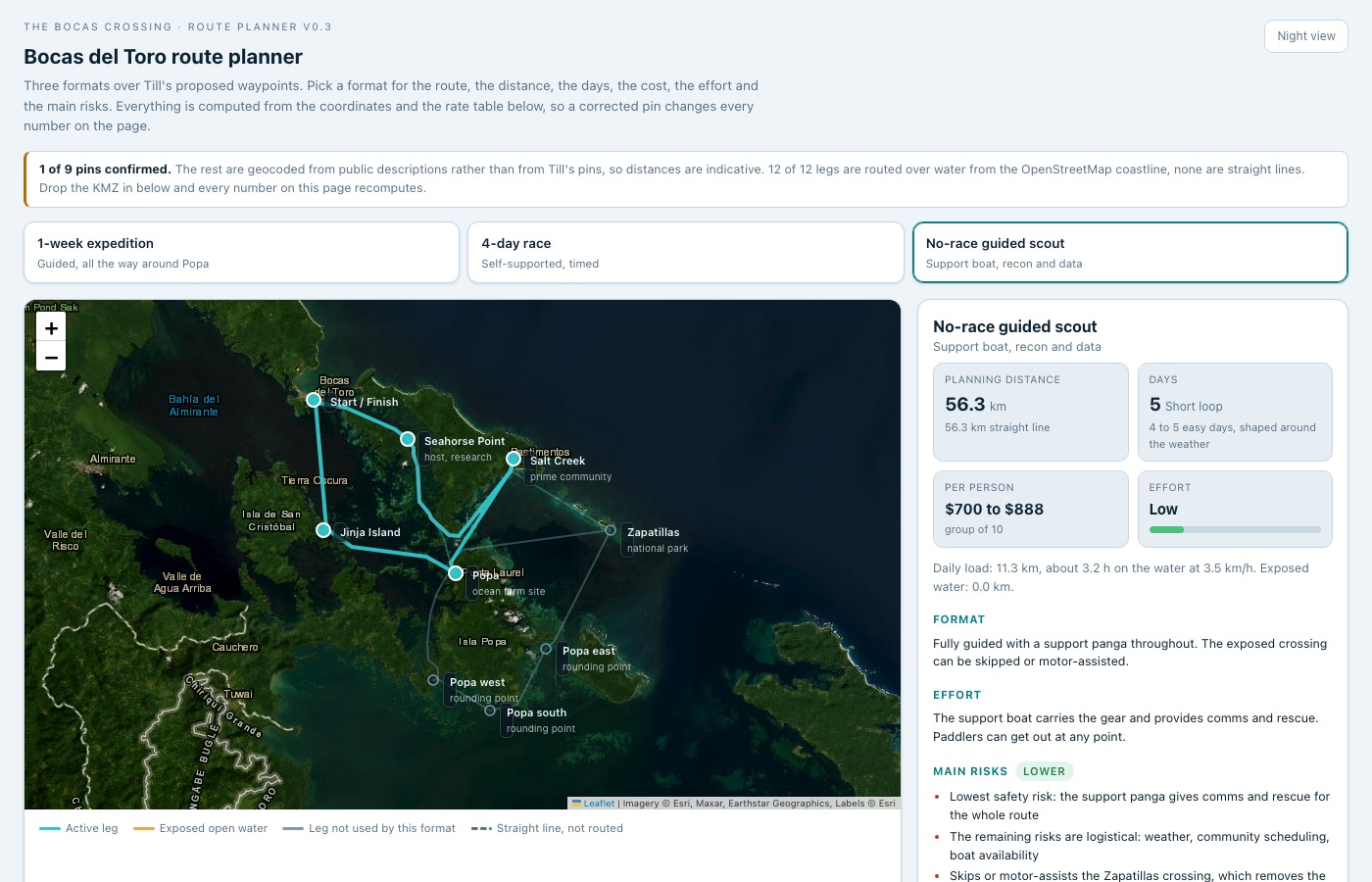
We think stewardship is also a jobs question. Cleaning a sensor, running a transect, reading the season's maps, maintaining the tools: these are skills a community member can learn and paid work a coastal economy can hold. The gap is ordinary infrastructure: protocols written down, training that leads to a role, equipment a local crew can service without calling the manufacturer. Built that way, the capability stays after the partners leave.
This is what we mean when we say the work runs as a living lab (a lineage traced in A living lab): the people of a place are also its researchers, and the conditions of the place are part of the curriculum. The people carrying it are on Who we are.
Solutions
The instruments, the records, and the training to run them locally are collected at Solutions. If your community or organization is carrying some version of what is described here, or if you think we have read it wrong, we would like to hear from you.