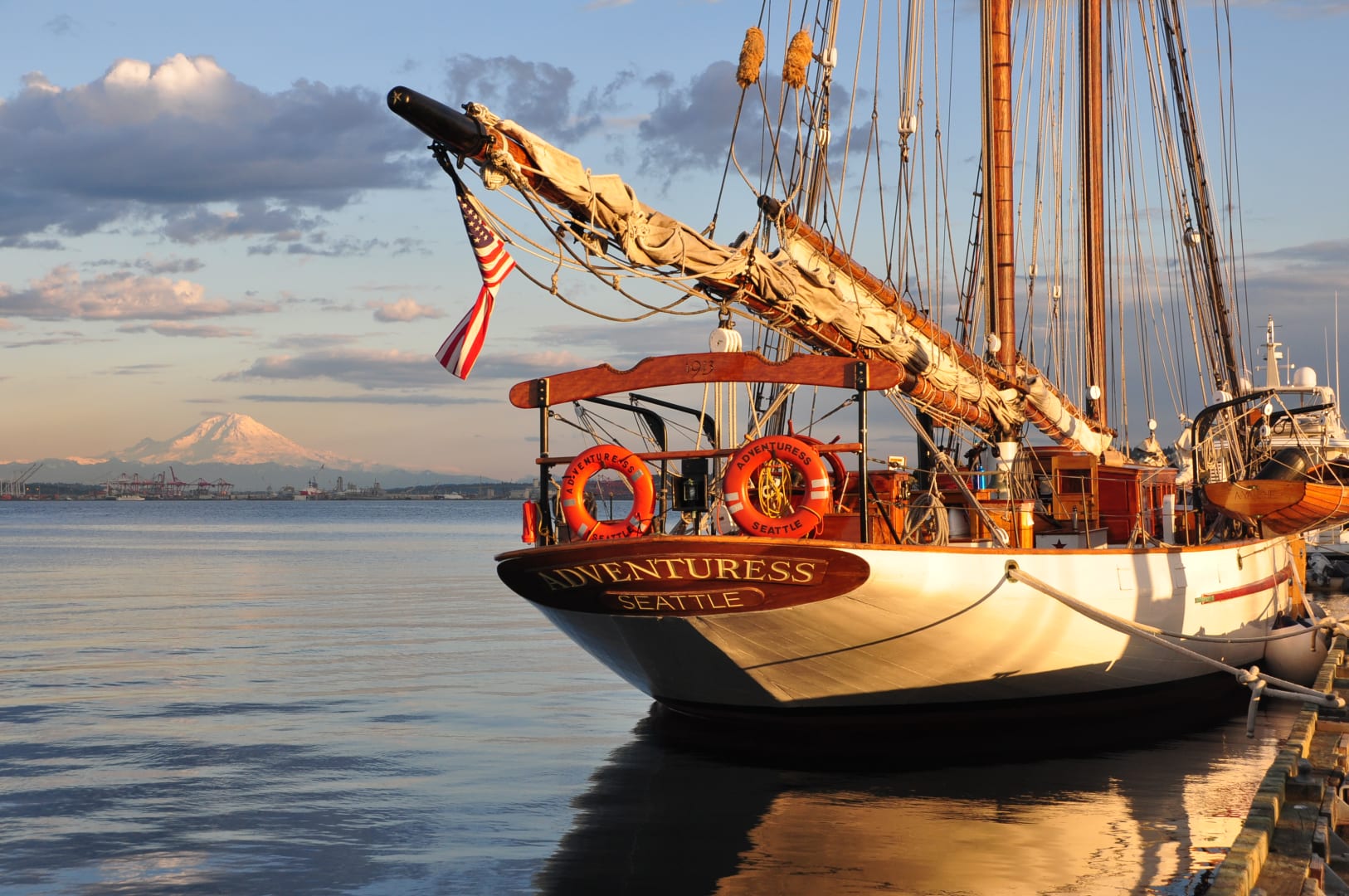
For four days at the end of summer, we sail out of Port Townsend and into the San Juans aboard the 1913 schooner Adventuress. We crew her together, and we give the passage one job: to take a careful reading of the Salish Sea as it is in 2026. That means the weather, the water, the life in it, and what it is to be on it now, set down in a record we make by hand and carry home.
The reading is better for being taken by people who see differently. We gather a working mix, those who sail these waters, study them, fish and farm them, paint and write them, and put them on the same watch. A scientist notices the plankton; a painter notices the light; a fisherman notices what has changed since last year. Set those readings beside one another and the sea comes into a focus none of us could reach alone.
We are after one thing: an honest reading of the Salish Sea and those who inhabit it in 2026, taken by enough different eyes that it holds more than any single pair could.
Who is Island Lab
The voyage is convened by Island Lab, a coastal-systems facilitation practice. Sound Experience brings the ship and the ecology; we bring the people and the way they are gathered. Our part is to choose the room with care and hold the four days, so the mix has the time and the room to make something of it.
Everyone aboard is a working member of the crew, the crew themselves are practitioners with knowledge to share, and a number of places are supported, so that cost keeps no one ashore who ought to be aboard.
Her crew
The heart of this voyage is the people who sail the Adventuress for a living. Educators, ecologists, working sailors, and storytellers, they spend their days reading this water, and over four days they teach it: how to set a sail and why, what the tide is doing and what lives in it, how to be on the water rather than only on top of it. They guide, they lend perspective, and they show a way of paying attention that is hard to come by ashore.
You join them as crew, standing watches, hauling on lines, taking your turn in the galley, and learning the ship at their side.
The exchange runs both ways. You take in what a life on these waters has taught them, turn it over against what you already know, and set your own perspective beside theirs. The days are kept loose enough that those conversations have somewhere to go.
The ship
Adventuress is a 1913 gaff-rigged schooner, a National Historic Landmark, and Puget Sound's environmental tall ship. For more than thirty years Sound Experience has sailed her as a floating classroom, and her crew carry the marine science of the Salish Sea with them: the plankton and the food web, the health of the Sound, and the long, patient work of stewardship.
The ecology is theirs to teach, and to book a place is to help keep that work going. We sail out of Port Townsend, just after the Wooden Boat Festival.
The record
The voyage makes one thing, and everything else bends toward it: a record of this passage, written and assembled by the people aboard. A time capsule for the Salish Sea in 2026.
What goes into it is partly set and partly up to who comes. A log of each day's weather and water. The shorelines and tidelines we walk, and what we find on them. What each of us stands up to share. Field notes, sketches, a reading taken at anchor, a poem if it turns up. Each person adds the thing they are best placed to notice, and one thing they want kept.
By Sunday it is bound into something that did not exist when we cast off, co-authored, the crew's pages beside the guests'. A copy goes home with everyone, and one stays with the ship.
What to expect
- Standing watches and sailing the ship with her professional crew
- Sessions on how the Salish Sea works: its plankton, food web, tides, and the people who live and work on it
- A turn for everyone aboard to share what they brought
- Shore landings to read a beach and a tideline when wind and tide allow
- Meals cooked and eaten together as a crew
- Building the record day by day, and binding it before we dock
The four days
The schedule bends to wind and tide, so this is the shape of it, not a timetable.
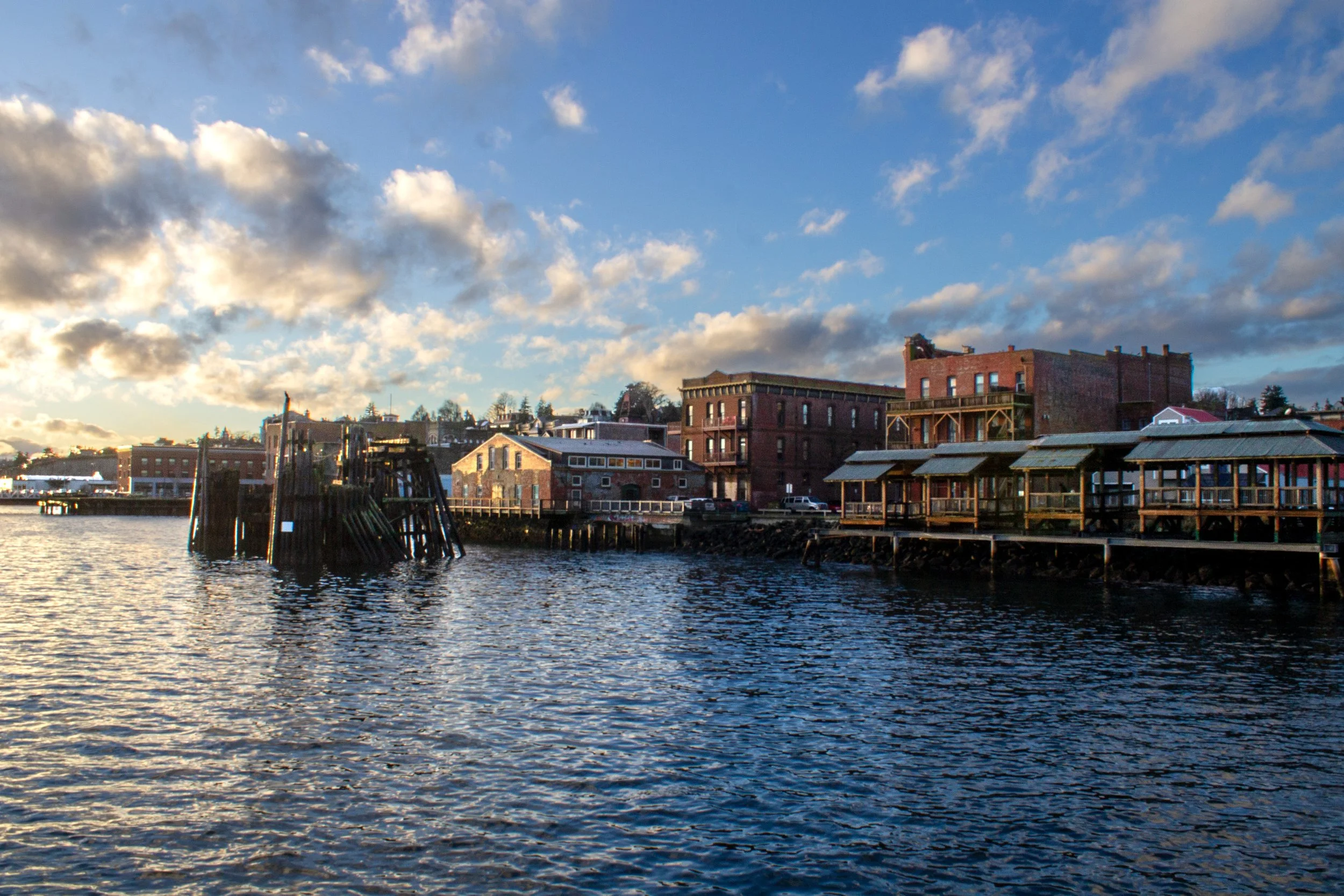
Thursday · Cross. Meet at the Port Townsend dock at 10am and cast off late morning, crossing the Strait of Juan de Fuca into the islands. Learn the ship, settle into your watch, and anchor for the first night. Dinner together, and the first pages of the record.
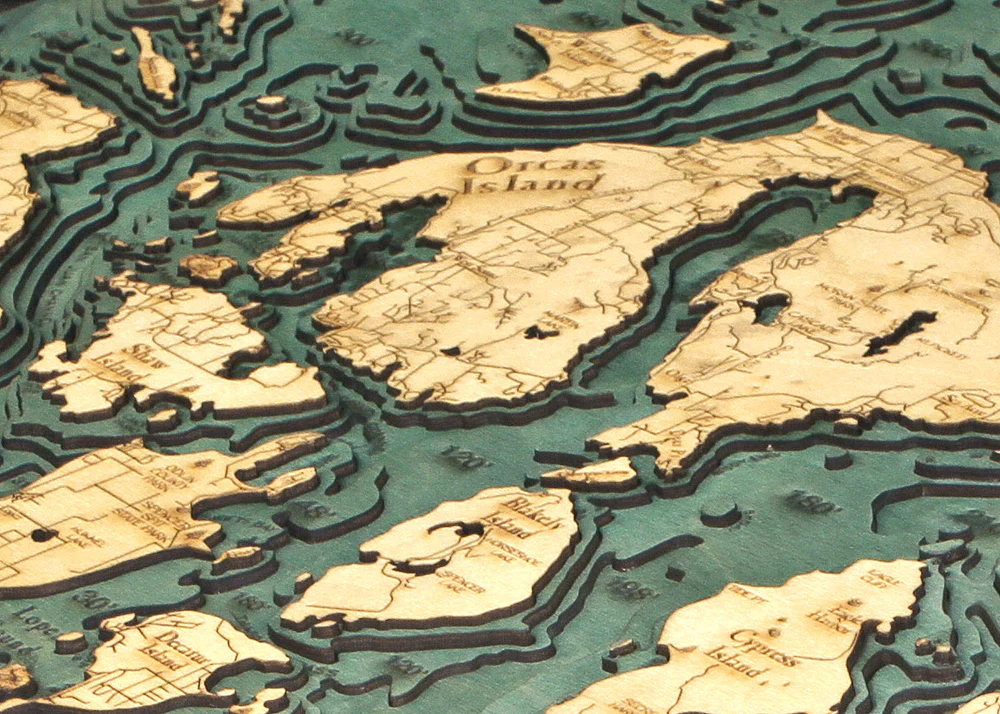
Friday · Read. A full day under sail through the San Juan Channel, with time ashore to walk a beach and read a tideline. The crew lead the first sessions on the ecology, what is in the water and how the Sound is faring, and the evening goes to what we each have to share.
Saturday · Make. Work back west through the islands toward the Strait, anchoring in the lee for our last night aboard. Long, uninterrupted stretches to write and assemble, and an evening to bring the record together.
Sunday · Carry it home. An early watch, then sail back across to Port Townsend and step ashore by 4pm with a copy of what we made.
Throughout, we are guests in the traditional home waters of the Coast Salish peoples, who have read these waters for thousands of years and still do. Expect to sleep aboard, and to eat and sail as a crew.
Who this is for
This works because of who is aboard. We look for explorers, artists, cultivators, and innovators, people who pay close attention to the living world and want to think about it alongside others who see it differently. Curiosity matters more than any title, and a willingness to get your hands wet matters most of all.
What we are really after is range, enough different ways of reading the same water that the record we make holds more than any one of us could see alone. That is why the room is chosen with care.
Your contribution is what makes it, so we look for people ready to share what they know of these waters and this moment, in whatever form that knowledge takes: a practice, a science, a craft, a story.
The rates
- Supporter, $2,500. If you or your institution can give more, the extra helps hold a place for someone who can't.
- Crew rate, $1,600. Four full days aboard with everything included.
- Artist and early-career, $1,000. A limited number of places.
Everyone sails the same voyage. The rate simply reflects what you can give. If cost is the barrier and you would otherwise be aboard, say so in your application.
Included
- Your berth aboard for three nights
- All meals aboard
- Every session and the full voyage
- A copy of the time capsule once it is made
Not included
- Travel to and from Port Townsend
- Personal gear and foul-weather kit
- Trip insurance (advised)
Good to know
No experience needed. You do not need to have sailed before. The crew teach everything you need, and a safety briefing comes first.
A working ship asks something of you. Physical activity, early watches, shared quarters, and real weather. A reasonable level of fitness and mobility helps, and seasickness is possible.
Weather. Adventuress is a sailing vessel in the Salish Sea in September. Routing is set day to day for safety, and the captain's word is final. If weather closes a window we anchor and carry on.
Food. Meals aboard are provided. We plan around dietary needs as best we can within the realities of a galley at sea.
What to bring. Layers and foul-weather gear. A full packing list follows once you have a place.
Getting there. The voyage departs from Port Townsend, just after the Wooden Boat Festival. Travel to and from the dock is your own.
Applying, payment, and cancellation. Applications are due 1 August. We read them as they come in and reply to everyone. If you are offered a place, the full amount holds it, due 15 August, and the cancellation terms come with your offer.