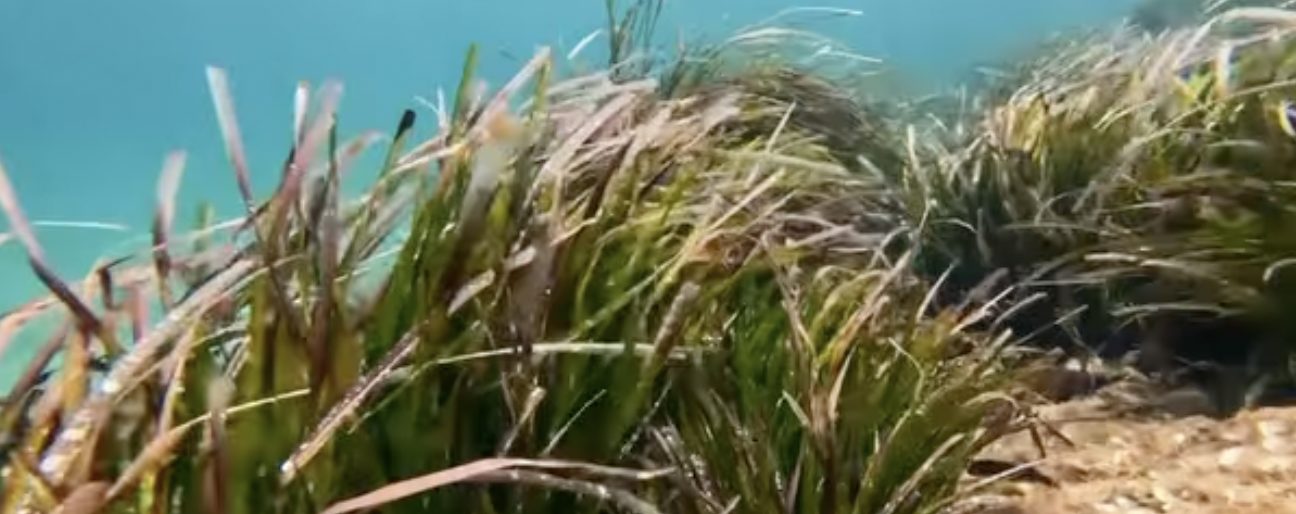
If you stick your head underwater in the Mediterranean, you might come across an octopus, some ancient pottery, or a modestly magnificent seagrass forest two hundred millennia older than Poseidon himself.
Posidonia oceanica is the underwater Amazon rainforest of the Med, foundational to sustaining life: biodiversity, fish nurseries, water quality, coastline protection, carbon sequestration, and interwoven with the traditions of the diverse cultures around the sea. In other words, swimming, eating seafood, not losing beaches to storms, not turning our planet into a sauna, and living well. In the Kerkennah Islands of Tunisia, families steward sea-garden plots handed down generationally, and create mazes to trap fish without damaging the seabed.
Posidonia is really, really good at long-term carbon sequestration, collectively stashing a year of the entire EU's emissions. That is theoretically permanent, unless the Posidonia is destroyed by anchors or illegal trawling. Places like the Balearic Islands take this seriously, with strict boating protocols and patrol boats.
As you might have suspected, the number one threat to Posidonia is the warming ocean, with the Med warming more than 20 percent faster than the global average. On our current warming trajectory with no action, Posidonia may be extinct by 2100, with 80 percent losses projected. The best protection for Posidonia is more Posidonia. Denser, healthier meadows show greater resistance to compounding local stressors, and raise the chances that meadows can adapt to warmer water and find cooler places, maybe with some assistance.